Song 宋
Desk & stool
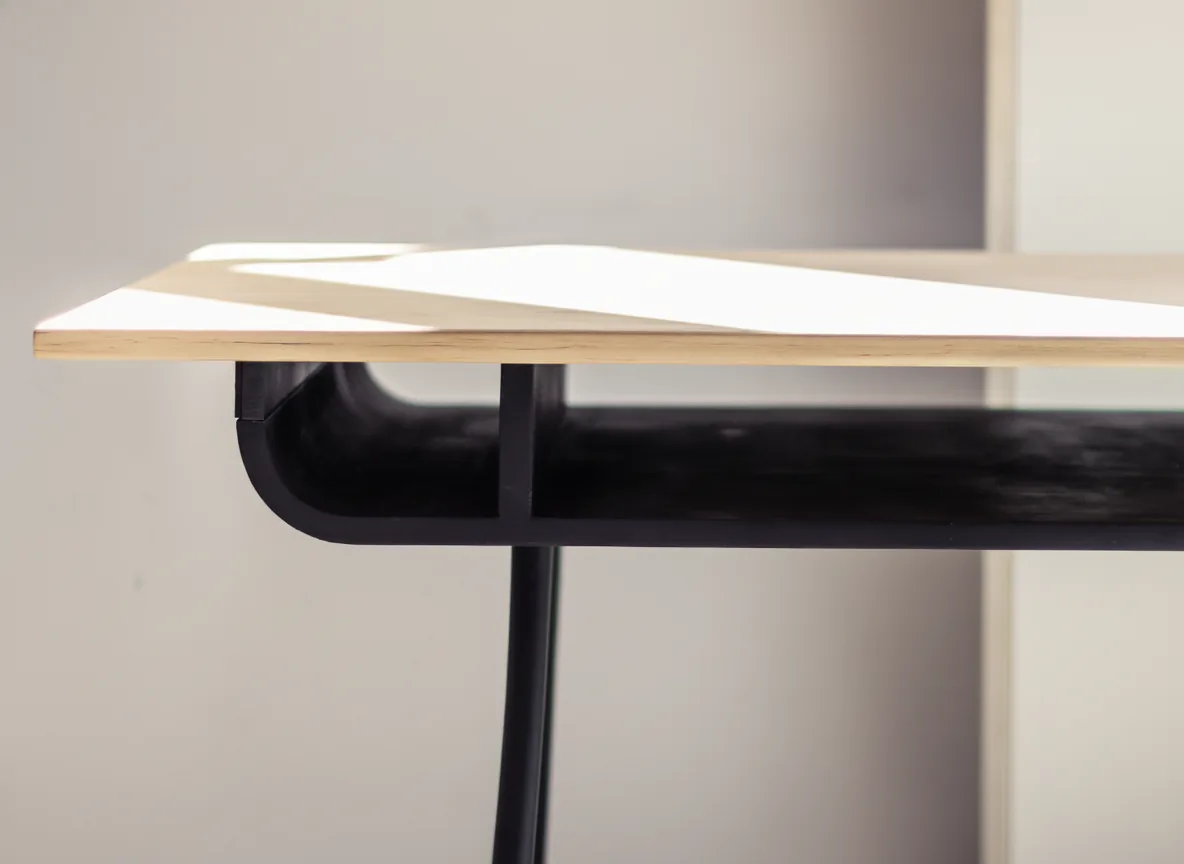
A desk-and-stool duo that reinterprets Song-dynasty temple language through contemporary fabrication. Arches, segmented members, and carved rhythm from temple architecture were translated into parametric layouts that shaped pine, plywood, galvanized steel, acrylic, and leather into ergonomic, refined forms. Shown at the Yodex design exhibition in Taipei, the pieces test whether historical structural motifs can carry functional furniture without becoming decorative pastiche.
Form reference system
Temple motifs (arches, segmented members, fillets) were extracted into a form reference library. Each motif was sketched in isolation, then combined in paper studies to test how they read at furniture scale. The goal was to find proportions where the historical reference was present but not literal, where someone familiar with Song architecture would recognize the source but the furniture stood on its own as a functional object.
Prototyping and testing
Full-scale mockups were built in PVC, MDF, and plywood. User testing revealed that the original seat angle was too upright and the base lacked stiffness under lateral load. 3D files and parametric layouts were updated to correct both issues. This phase moved between digital models and physical tests, using each to check the other until the geometry felt right in both formats.
Production and assembly
Parts were produced with partner shops: galvanized steel frames were bent to match the parametric curves, and wood components were CNC-cut from pine and plywood. In-house assembly included joinery tuning (adjusting tolerances where steel meets wood), CMF work (sanding pine to a smooth finish, laser-cutting acrylic accent panels, stitching leather seat covers), and final quality checks on every connection point.
Specifications
Desk: L110 × W76 × H65 cm · pine, galvanized steel, acrylic. Stool: W45 × D39 × H50 cm · plywood, galvanized steel, cotton, leather. Yodex design exhibition · Taipei, Taiwan · 2017–2018
Gallery
- Challenges1/2
Early assemblies creaked and wobbled where steel met plywood. Connections were reinforced with additional hardware and adhesive. Seat and back angles were refined through multiple rounds of user testing until the ergonomics felt resolved.
- Insights2/2
Heritage reads strongest when structure carries the motif rather than surface decoration. Prioritize ergonomic tests early, then let detailing follow the proven geometry.
Swipe to explore