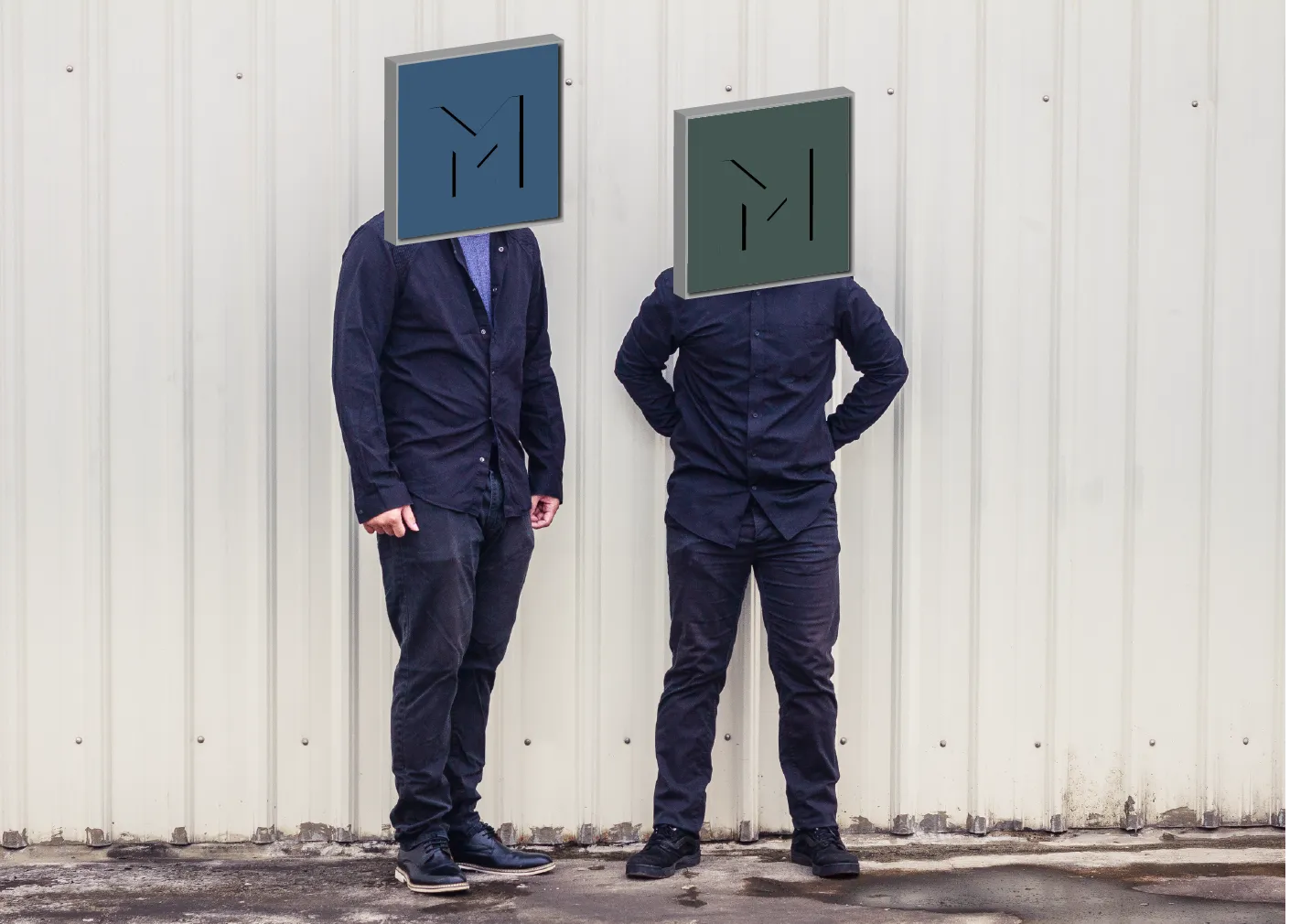
Minofmeer identity
A ten-year identity for a furniture and craft studio. Built to bend without breaking.
Brand identity for Minofmeer, a furniture and craft studio in Taiwan. Refined for ten years. Anyone in the studio can make on-brand work without a designer in the room.
Role
Co-founder and creative lead. Wrote the manifesto. Then I turned it into the brand system. The direction, the guidelines, every asset.
Team
Co-founder + product designer
The challenge
A new furniture and craft studio with no brand at all. Everything had to be defined from zero before it could face the world.
The approach
One idea drives everything: min vs meer , less versus more. Some projects need restraint, others need more. The identity bends to each project instead of forcing one look.
Minofmeer means "more or less" in Afrikaans. The name is the philosophy: some projects need restraint, others need more. That balance decides every choice, from material to detail to when to stop.
Color palette
Primary
#466A8C
Secondary
#4E655F
Tertiary
#543144
Typography
More or less
More or less
Identity development
A geometric cube mark on an isometric grid, readable from multiple angles. Deep blues for credibility, cream for warmth. Type that carries English and Chinese in one system.
Operational system
Templates, grids, and docs written for non-designers. Proposals, contracts, packaging. Anyone in the studio can make on-brand work without help.
Website design
The site works like the studio thinks. Numbered case studies. The same page structure each time. No decoration for its own sake.
- Challenges1/2
A system that stretches from restrained to expressive without breaking. The guidelines had to bend with each project, not fight it.
- Insights2/2
If someone needs the guidelines explained, the guidelines are too complex. The brand works because it gets out of the way.
Swipe to explore